

What Is Ethereum? How It Works, Uses and Risks


Introduction
Ethereum is a decentralized blockchain platform that enables smart contracts and decentralized applications (dApps). While Bitcoin introduced blockchain technology as a decentralized digital currency, Ethereum expanded its use cases by creating a programmable network for building applications.
Its native cryptocurrency, ETH, is used to pay transaction fees and support activities across the Ethereum network. Since its launch in 2015, Ethereum has become one of the most widely used blockchain networks, supporting applications across areas such as decentralized finance (DeFi), NFTs, and Web3.
This guide explains what Ethereum is, how it works, the uses of ETH, its key features, and the potential risks users should understand.
What Is Ethereum?
Ethereum was created to expand blockchain technology beyond simple digital payments by introducing programmable smart contracts and decentralized applications. Proposed by Vitalik Buterin and other contributors in 2013, Ethereum officially launched in 2015 with the goal of creating a programmable network where developers could build applications without centralized control.
The term Ethereum refers to the entire blockchain network, including its technology, ecosystem, and applications. Its native cryptocurrency is called ETH, which is used to pay transaction fees, interact with applications, and support network operations.
Ethereum vs ETH
Although Ethereum and ETH are often used interchangeably, they represent different concepts:
Term | Meaning |
Ethereum | The decentralized blockchain network that supports smart contracts and dApps |
ETH | The native cryptocurrency used within the Ethereum network |
Ethereum provides the infrastructure for blockchain-based applications, while ETH is the digital asset that powers activities within this ecosystem. Together, they form the foundation of one of the largest blockchain networks in the cryptocurrency industry.
How Does Ethereum Work?
Ethereum works through blockchain technology, smart contracts, and a decentralized network of participants. These components allow Ethereum to process transactions and support applications without relying on a central authority.
How Does the Ethereum Blockchain Work?
The Ethereum blockchain is a public distributed ledger that records transactions and network activity. Instead of storing information on a single centralized server, Ethereum maintains data across a global network of computers called nodes.
When users send ETH or interact with decentralized applications, transactions are broadcast to the network. Validators verify these transactions according to Ethereum’s consensus rules, and confirmed activity is added to the blockchain. This process creates a transparent and permanent record of operations on the network.
What Are Smart Contracts?
Smart contracts are self-executing programs that run on the Ethereum blockchain. They automatically perform predefined actions when specific conditions are met, allowing users to interact with applications without relying on intermediaries.
For example, a smart contract can manage transactions, execute agreements, or provide access to decentralized services based on programmed rules. Smart contracts are the foundation of many Ethereum-based applications, including decentralized finance (DeFi), NFT platforms, and other Web3 services.
What Is the Ethereum Virtual Machine (EVM)?
The Ethereum Virtual Machine (EVM) is the computing environment that executes smart contracts on the Ethereum network. By providing a standardized environment for executing smart contracts, the EVM allows developers to build applications that operate consistently across the Ethereum network.
How Does Ethereum Use Proof-of-Stake?
Ethereum uses a Proof-of-Stake (PoS) consensus mechanism to maintain network security and process transactions. After transitioning from Proof-of-Work to Proof-of-Stake in 2022, Ethereum relies on validators who lock ETH as a stake to participate in confirming network activity.
Validators help secure the blockchain by verifying transactions and maintaining network operations. In return, eligible validators can receive rewards for supporting the Ethereum network.
What Is ETH Used For?
ETH is used to perform activities across the Ethereum ecosystem, including paying transaction fees, securing the network, and interacting with decentralized applications.
Paying Transaction Fees
One of the primary uses of ETH is paying transaction fees on the Ethereum network. Every transaction or interaction with a smart contract requires a fee known as a gas fee, which is paid in ETH.
For example, when users transfer ETH, trade tokens through decentralized exchanges, or interact with blockchain applications, ETH is used to pay for the computational resources required to process these activities.
Staking and Network Security
ETH is also used to help secure the Ethereum network through Proof-of-Stake. Users can stake ETH to participate in network validation, where validators help confirm transactions and maintain blockchain security.
Supporting DeFi Applications
Ethereum is one of the largest platforms for decentralized finance (DeFi), and ETH plays a key role within this ecosystem. Many DeFi applications use ETH for transactions, collateral, liquidity, and other financial activities.
Users can interact with decentralized exchanges, lending platforms, and other blockchain-based financial services without relying on traditional financial intermediaries.
Powering NFTs and Web3 Applications
ETH is widely used across NFT marketplaces, blockchain games, and other Web3 applications built on Ethereum. Developers use Ethereum’s smart contract infrastructure to create decentralized services, while users often use ETH to purchase assets, pay fees, or participate in these applications.
Through these different functions, ETH serves as both a utility asset and a key component of the broader Ethereum ecosystem.
Key Features of Ethereum
Ethereum’s design allows it to support a wide range of blockchain applications while maintaining a decentralized and transparent network. Several key features distinguish Ethereum from traditional digital systems and other blockchain networks.
Feature | Description |
Smart Contracts | Ethereum supports programmable smart contracts that automatically execute predefined actions based on specific conditions, enabling decentralized applications. |
Decentralized Network | Ethereum operates through a global network of participants rather than being controlled by a single organization, allowing users to interact without centralized intermediaries. |
Proof-of-Stake Consensus | Ethereum uses Proof-of-Stake, where validators stake ETH to help secure the network and verify transactions. |
Large Application Ecosystem | Ethereum supports thousands of decentralized applications across areas such as DeFi, NFTs, gaming, and Web3 services. |
Benefits and Risks of Ethereum
Ethereum provides a flexible infrastructure for blockchain applications and digital services, but users should also understand the potential challenges associated with using the network and holding ETH.
Benefits of Ethereum
Wide Range of Use Cases
One of Ethereum’s main advantages is its ability to support various blockchain-based applications. Ethereum's flexible infrastructure allows developers to create applications for different industries.
Large Developer Ecosystem
Ethereum has one of the largest developer communities in the blockchain industry. A strong ecosystem of developers, users, and applications has contributed to Ethereum’s continued adoption and network development.
Decentralized and Transparent Infrastructure
Ethereum operates through a decentralized network where transactions and application activities are recorded on the blockchain. This allows users to verify network activity without relying on a single centralized authority.
Support for Digital Ownership and Innovation
By enabling programmable applications and digital assets, Ethereum provides infrastructure for new forms of digital ownership, financial services, and decentralized applications.
Risks of Ethereum
ETH Price Volatility
Like other cryptocurrencies, ETH is subject to price volatility. The value of ETH can change significantly due to factors such as market conditions, investor sentiment, technological developments, and broader economic trends.
Users should understand that holding ETH involves market risks, and the price of ETH may increase or decrease over time. Before purchasing ETH, users can check real-time ETH price information and market trends through platforms such as CoinEx.
Network Fee Fluctuations
Ethereum transactions require gas fees paid in ETH. During periods of high network activity, increased demand for block space may lead to higher transaction costs.
Smart Contract Vulnerabilities
Although Ethereum provides infrastructure for decentralized applications, smart contracts may contain coding errors or security vulnerabilities. Issues within applications built on Ethereum can create risks for users.
Competition From Other Blockchains
Ethereum faces competition from other blockchain networks that aim to provide faster transactions, lower fees, or different application environments. Changes in blockchain technology may influence the broader ecosystem.
Regulatory Uncertainty
Cryptocurrency regulations continue to develop across different regions. Future regulatory changes may affect how Ethereum and related applications are used.
Overall, Ethereum provides significant opportunities for blockchain innovation while also facing challenges such as network costs, security risks, and regulatory uncertainty. Users should understand both its benefits and risks before interacting with the network or using ETH.
How to Get Started With Ethereum
For beginners, getting started with Ethereum usually involves understanding the network, acquiring ETH, and choosing a secure storage method.
Learn the Basics of Ethereum
Before using Ethereum, beginners should understand the difference between Ethereum and ETH, how smart contracts work, and how transactions are processed on the network. Learning concepts such as wallets, gas fees, and blockchain security can help users make more informed decisions.
Buy ETH Through a Cryptocurrency Exchange
Users can acquire ETH through cryptocurrency exchanges that support Ethereum trading. Exchanges allow users to buy, sell, and trade ETH using different payment methods or cryptocurrency pairs.
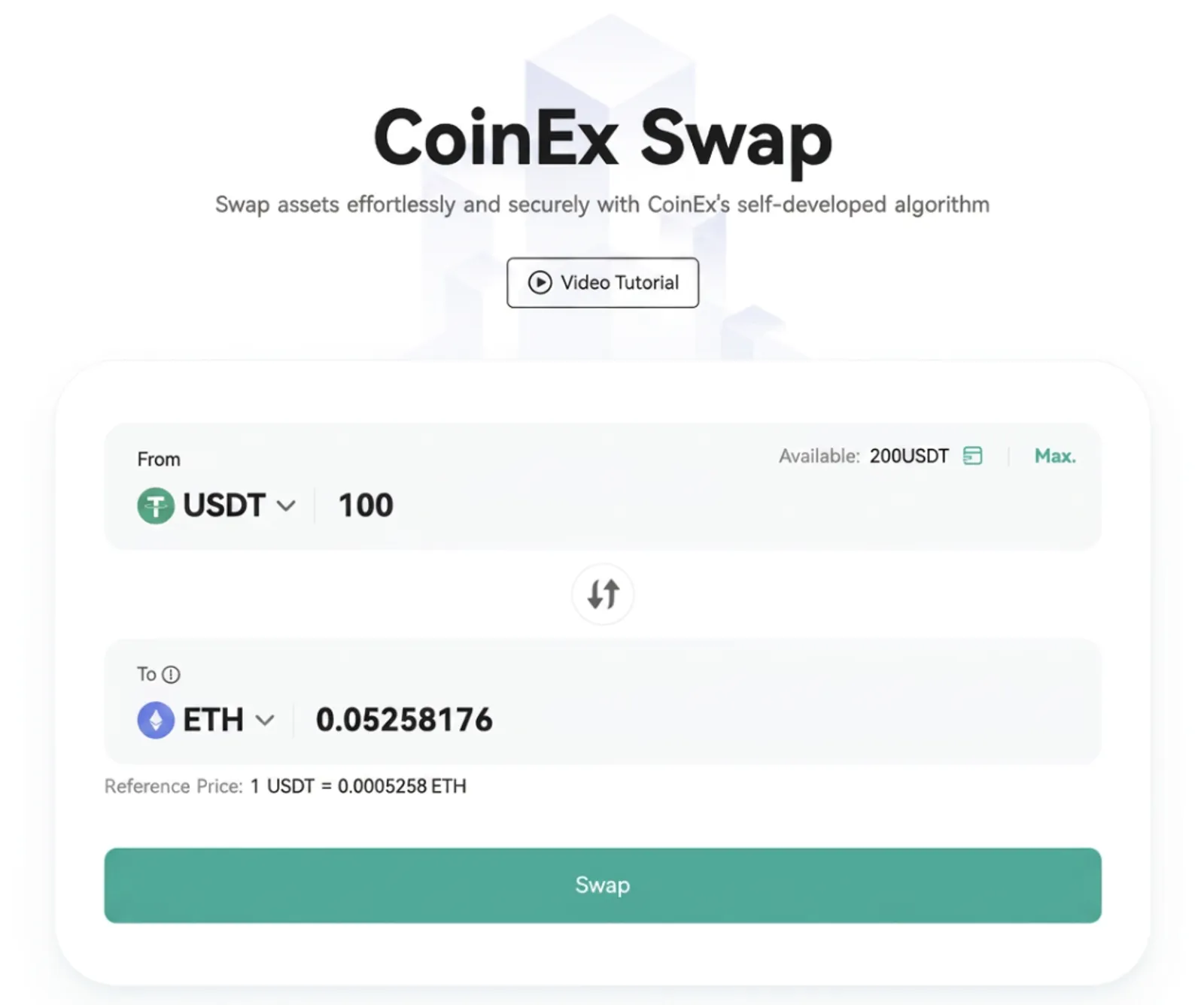
For example, users can trade ETH/USDT pairs to exchange USDT for ETH based on the current market price. Platforms such as CoinEx provide access to ETH trading services, allowing users to manage ETH alongside other digital assets.
Store ETH Securely
After acquiring ETH, users should consider how to store their assets securely. Common storage options include:
- Exchange wallets: Convenient for users who actively trade ETH, while requiring users to follow platform security practices.
- Software wallets: Allow users to manage their own private keys and interact with decentralized applications.
- Hardware wallets: Provide offline storage for users who prioritize long-term asset security.
Regardless of the storage method, users should protect important security information such as private keys and recovery phrases to reduce the risk of unauthorized access.
By understanding Ethereum fundamentals, choosing suitable tools, and following security practices, beginners can take their first steps into the Ethereum ecosystem.
FAQs About Ethereum
What Is Ethereum?
Ethereum is a decentralized blockchain platform that allows developers to build and run smart contracts and decentralized applications (dApps). Unlike traditional online platforms controlled by a single organization, Ethereum operates through a distributed network.
Its native cryptocurrency, ETH, is used within the network for activities such as paying transaction fees, staking, and interacting with Ethereum-based applications.
What Is the Difference Between Ethereum and ETH?
Ethereum and ETH are closely related but refer to different things.
Ethereum refers to the blockchain network, including its infrastructure, smart contract capabilities, and ecosystem of applications. ETH is the native cryptocurrency of Ethereum, used to pay gas fees, secure the network through staking, and interact with decentralized applications.
In simple terms, Ethereum is the platform, while ETH is the asset that powers activities on that platform.
What Is ETH Used For?
ETH has several functions within the Ethereum ecosystem. It is used to pay gas fees for transactions, support network security through staking, and interact with applications built on Ethereum.
ETH is also widely used in decentralized finance (DeFi), NFT marketplaces, and other Web3 applications that rely on Ethereum infrastructure.
Is Ethereum Better Than Bitcoin?
Ethereum and Bitcoin are designed for different purposes.
Bitcoin primarily focuses on decentralized digital value transfer and is often viewed as a digital asset, while Ethereum focuses on providing a programmable blockchain platform for smart contracts and decentralized applications.
The two networks have different designs and use cases, so comparing them depends on the purpose being considered.
Is Ethereum Safe?
The Ethereum network uses blockchain technology, cryptography, and Proof-of-Stake mechanisms to maintain security. However, users should understand potential risks, including ETH price volatility, smart contract vulnerabilities, and wallet security issues.
Using secure wallets, protecting private keys, and carefully evaluating applications can help users reduce security risks when interacting with Ethereum.
Conclusion
Ethereum has become one of the most important blockchain platforms by providing infrastructure for decentralized applications and digital innovation. Its native cryptocurrency, ETH, supports network operations and allows users to participate in the Ethereum ecosystem.
By understanding Ethereum’s technology, ETH’s use cases, and the potential benefits and risks, beginners can develop a clearer view of how Ethereum functions within the broader cryptocurrency industry. As blockchain applications continue to evolve, Ethereum remains a major platform for innovation across areas such as DeFi, NFTs, and Web3.
Disclaimer: This article is for informational purposes only and does not constitute financial advice. Cryptocurrency prices can be highly volatile, and purchasing cryptocurrency involves risks, including the possibility of losing part or all of your funds. Always conduct your own research and consider your financial situation before making any cryptocurrency decisions.